
Manufacturing CMMS Software for Modern Factories

Manufacturing CMMS Software for Modern Factories

Manufacturing CMMS has become a critical tool for manufacturers looking to improve maintenance efficiency and gain better control over their equipment and assets. In today’s competitive manufacturing environment, companies can no longer rely on outdated systems to manage equipment reliability. Manufacturing CMMS provides a centralized platform to manage maintenance activities, track assets, schedule preventive maintenance, and reduce unexpected downtime across production facilities.

Manufacturing CMMS helps organizations transition from reactive maintenance to preventive and planned maintenance models. Instead of responding to breakdowns after they occur, maintenance teams can address maintenance needs proactively. This minimizes disruptions and helps ensure that production lines operate smoothly without interruption. A well-implemented Manufacturing CMMS directly supports productivity and reliability goals.

Preventive maintenance is a core strength of Manufacturing CMMS software. Manufacturers can schedule maintenance tasks based on time, usage, or condition. This approach extends equipment lifespan while lowering overall maintenance costs. Manufacturing CMMS ensures that maintenance activities are consistent, documented, and aligned with production demands.

Manufacturing CMMS also improves asset management by providing full visibility into equipment history and performance. Maintenance teams can access service records, warranties, manuals, and inspection logs from a single system. Having accurate asset data helps manufacturers make informed maintenance decisions. Manufacturing CMMS helps organizations protect their investments and maximize return on equipment assets.

Work order management is another critical function of Manufacturing CMMS. Manufacturing reliability maintenance software focuses on uptime instead of emergency repairs. Maintenance requests can be submitted, assigned, prioritized, and completed within the system. This reduces paperwork and improves communication between maintenance teams and operations staff. Manufacturing CMMS . With Manufacturing CMMS, maintenance workflows become more organized and transparent.
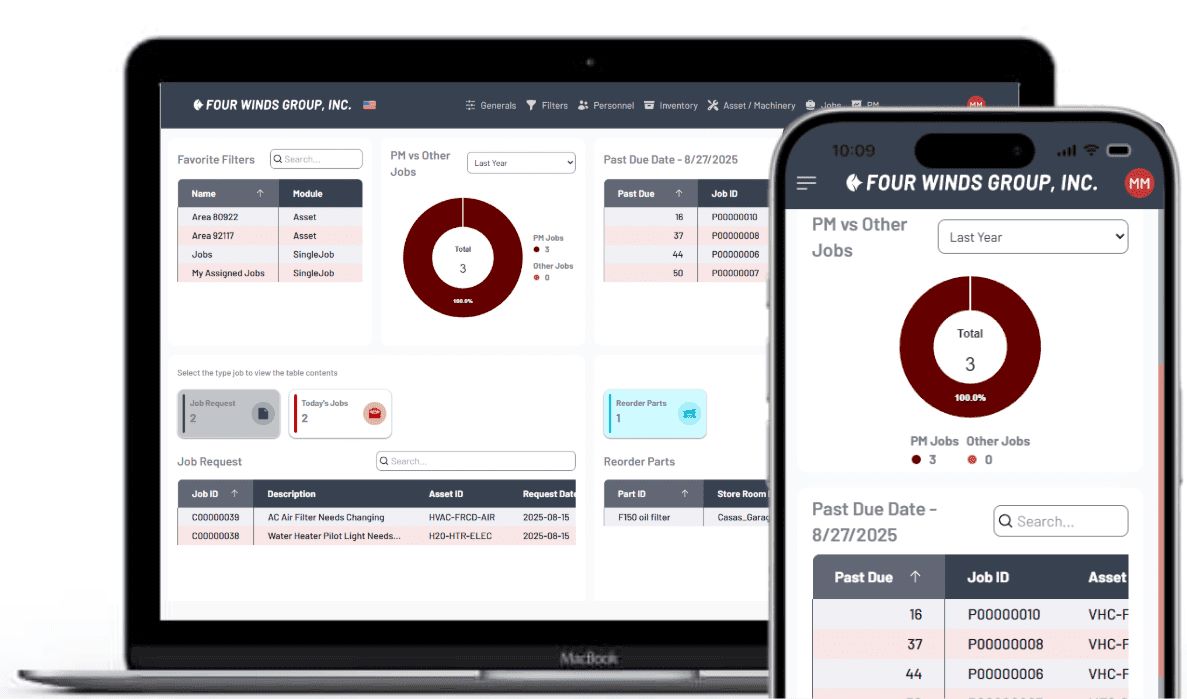
Effective inventory control is a key advantage of Manufacturing CMMS. Manufacturers can track spare parts availability, usage, and reorder points. By managing inventory within Manufacturing CMMS, facilities reduce waste and improve response times. Manufacturing CMMS supports smoother maintenance execution through accurate inventory control.

For manufacturers operating multiple facilities, Manufacturing CMMS provides centralized oversight across locations. Maintenance leaders can compare performance, track downtime trends, and standardize maintenance processes across plants. This level of visibility improves consistency and supports continuous improvement initiatives.

Mobile access is an important feature of today’s Manufacturing CMMS platforms. Technicians can view work orders, update task status, and record maintenance data directly from the shop floor. Manufacturing CMMS mobile functionality keeps teams connected and informed at all times.

Advanced reporting is a powerful component of Manufacturing CMMS software. Managers can analyze maintenance costs, downtime frequency, asset performance, and labor utilization. Manufacturing CMMS analytics provide actionable insights for long-term planning. Over time, this leads to better reliability, lower costs, and improved productivity.

Implementing Manufacturing CMMS is a strategic investment in operational reliability. The system is designed to scale with business growth and adapt to changing operational needs. Whether transitioning from manual processes or replacing legacy software, Manufacturing CMMS offers a structured and user-friendly solution.

From small production facilities to large industrial plants, Manufacturing CMMS delivers value. Maintenance managers, plant managers, and operations leaders benefit from improved visibility and control. By improving maintenance efficiency and reducing unplanned downtime, manufacturers can maintain production schedules and meet customer demands more consistently.

As manufacturing environments become more complex, the role of Manufacturing CMMS continues to grow. Manufacturing CMMS supports safer, more efficient maintenance practices. Organizations that invest in Manufacturing CMMS gain a competitive advantage through improved asset performance and operational stability.

Manufacturing CMMS is not just a maintenance tool; it is a productivity enabler. By centralizing maintenance data, automating workflows, and providing actionable insights, Manufacturing CMMS empowers manufacturers to make smarter decisions and achieve sustainable growth. With Manufacturing CMMS, manufacturers build a stronger foundation for long-term success.

Manufacturing CMMS

Manufacturing CMMS manufacturers ke liye ek powerful solution hai jo maintenance operations ko organized, predictable, aur efficient banata hai. Is system ki madad se manufacturers preventive maintenance plan kar sakte hain, equipment performance track kar sakte hain, aur unexpected breakdowns se hone wale downtime ko kaafi had tak kam kar sakte hain. Manufacturing CMMS maintenance teams ko real-time visibility deta hai jisse work orders, asset history, aur maintenance schedules ek hi jagah par manage ho jaate hain. Iska result hota hai better equipment reliability, kam maintenance cost, aur smoother production flow. Jo manufacturers apni operations ko long-term ke liye stable aur productive banana chahte hain, unke liye Manufacturing CMMS ek smart aur practical investment hai.

The technical meaning of upkeep involves functional checks, servicing, repairing or replacing of needed gadgets, equipment, equipment, developing framework and supporting energies in industrial, service, and property setups. Terms such as "predictive" or "planned" maintenance describe different affordable methods aimed at keeping devices operational; these tasks take place either prior to or after a potential failure.

.

A digital maintenance management system (CMMS) is any type of software that preserves a computer database of information concerning a company's upkeep procedures. This information is planned to aid upkeep workers do their jobs better (for instance, figuring out which machines call for upkeep and which storage rooms consist of the spare parts they require) and to aid administration make notified decisions (for instance, computing the price of equipment break down repair work versus preventative maintenance for every maker, perhaps causing far better appropriation of resources). CMMS information might also be used to confirm regulative conformity. To effectively regulate the maintenance of a center, info is called for to analyze what is happening. Manually, this calls for an incredible amount of effort and time. A CMMS also enables document keeping, to track finished and assigned jobs in a timely and cost-efficient fashion.

.

Software as a service (SaaS) is a cloud computer solution design in which a carrier supplies software to clients while taking care of the needed physical and software application sources. SaaS applications are accessed by means of either a web application or locally-installed software application. Unlike various other software application delivery versions, SaaS divides "the property and ownership of software program from its usage." SaaS usage began around 2000, and by 2023 was the major type of software program application release. Unlike a lot of self-hosted software products, only one variation of the software exists and just one running system and configuration is sustained. SaaS items normally work on rented out infrastructure as a solution (IaaS) or platform as a solution (PaaS) systems including equipment and in some cases operating systems and middleware, to fit fast rises in usage while offering instant and continual availability to consumers. SaaS customers have the abstraction of infinite computer sources, while economic climate of scale drives down the expense. SaaS designs are normally multi-tenant; usually they share sources in between customers for performance, yet in some cases they supply a siloed atmosphere for an extra fee. Common SaaS profits models include freemium, subscription, and usage-based costs. Unlike typical software, it is seldom feasible to acquire a perpetual certificate for a specific variation of the software. There are no details software program advancement techniques that distinguish SaaS from other application growth, although there is frequently a focus on constant testing and releases.

.

Industrial design (IE) is concerned with the layout, improvement and installation of incorporated systems of individuals, products, details, devices and energy. It draws upon specialized expertise and skill in the mathematical, physical, and social sciences together with the concepts and approaches of engineering analysis and layout, to define, anticipate, and review the outcomes to be gotten from such systems. Industrial engineering is a branch of engineering that concentrates on enhancing intricate procedures, systems, and companies by improving performance, productivity, and high quality. It incorporates principles from design, math, and company to layout, assess, and handle systems that involve individuals, materials, information, tools, and energy. Industrial designers aim to minimize waste, enhance operations, and improve general performance throughout numerous sectors, including manufacturing, healthcare, logistics, and solution sectors. Industrial designers are utilized in many sectors, such as car production, aerospace, health care, forestry, financing, leisure, and education. Industrial engineering combines the physical and social sciences along with design principles to enhance processes and systems. A number of industrial design principles are followed to make sure the reliable circulation of systems, procedures, and procedures. Industrial designers work to improve quality and performance while all at once cutting waste. They use concepts such as lean manufacturing, six sigma, information systems, procedure ability, and extra. These principles allow the development of new systems, processes or scenarios for the beneficial coordination of labor, materials and machines. Relying on the subspecialties entailed, industrial design might additionally overlap with, procedures study, systems design, making engineering, manufacturing engineering, supply chain design, procedure engineering, monitoring science, design administration, comfort designs or human elements design, safety and security design, logistics design, quality engineering or various other relevant abilities or areas.

.

In an organization context, operational efficiency is a dimension of resource allowance and can be specified as the proportion in between an outcome gained from business and an input to run an organization operation. When improving functional efficiency, the outcome to input ratio enhances. Inputs would typically be cash (price), people (gauged either as head count or as the number of full time equivalents) or time/effort. Outcomes would generally be cash (profits, margin, cash), brand-new clients, client loyalty, market differentiation, production, advancement, top quality, speed & & dexterity, complexity or possibilities. The terms "operational performance", "performance" and "productivity" are usually utilized mutually. An explanation of the distinction in between performance and (overall variable) efficiency is found in "An Intro to Efficiency and Productivity Evaluation". To make complex the significance, functional excellence, which is about constant renovation, not limited to performance, is occasionally utilized when indicating operational effectiveness. Occasionally, running excellence is likewise used with the exact same significance as functional efficiency.

.

About San Diego

Frequently Asked Questions

Manufacturing CMMS is a computerized maintenance management system designed specifically for manufacturing facilities. It works by centralizing maintenance tasks such as work orders, preventive maintenance schedules, asset records, and equipment history in one system, making maintenance planning and execution more efficient.

Manufacturing CMMS reduces downtime by allowing maintenance teams to schedule preventive maintenance, track equipment condition, and identify potential issues before they turn into major failures. This proactive approach keeps production running smoothly.

Yes, Manufacturing CMMS is scalable and can be used by small, mid sized, and large manufacturing facilities. It adapts to different operation sizes and helps smaller teams manage maintenance with the same efficiency as larger organizations.

Manufacturing CMMS can manage a wide range of assets including production equipment, machinery, tools, utilities, and facility infrastructure. It stores maintenance history, manuals, warranties, and performance data for each asset.

Preventive maintenance is a core function of Manufacturing CMMS. The system automatically schedules inspections and servicing based on time, usage, or condition, helping manufacturers avoid unexpected breakdowns and costly repairs.

Manufacturing CMMS improves productivity by reducing paperwork, organizing work orders, improving task prioritization, and giving technicians easy access to maintenance information. This allows teams to focus more on actual maintenance work.

Implementation time varies based on facility size and data readiness, but most modern Manufacturing CMMS solutions are designed for fast deployment with minimal disruption to daily operations.